
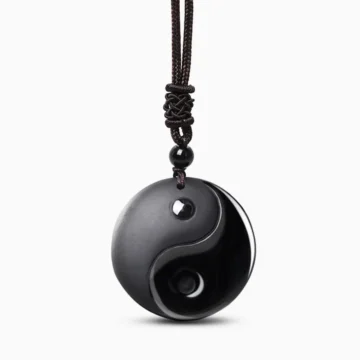
Yin Yang Necklace: A Black Obsidian Symbol of Balance, Grounding, and Quiet Strength
$39.99 Original price was: $39.99.$32.00Current price is: $32.00.
In Stock
- RISK-FREE MONEY BACK GUARANTEE
- GIFT-PACKAGED & READY TO GIVE
- 10% OFF ON 2+ ITEMS PURCHASED
- FREE SHIPPING OVER $50
Description
Card Content
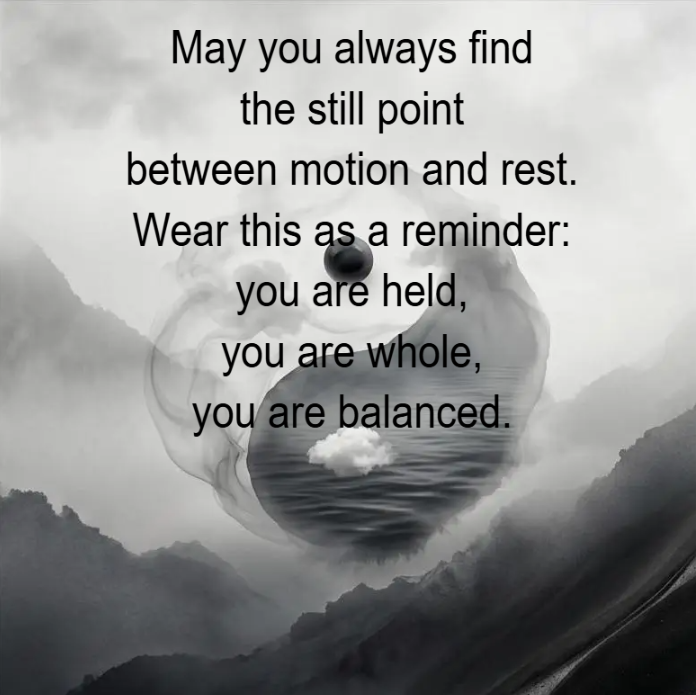
May you always find
the still point
between motion and rest.
Wear this as a reminder:
you are held,
you are whole,
you are balanced.
Suitable Age: All ages
Material: Obsidian
Includes: Gift bag, gift box, card
Design Philosophy
Yin yang necklace — the idea first came to me on a misty morning in the Wudang Mountains, where Zhang Sanfeng is said to have watched a magpie and a snake fight. The bird attacked with sharp, quick strikes. The snake yielded, coiled, and redirected. Neither won through force alone. That story, passed down for centuries, became the seed of taijiquan: the art of softness overcoming hardness, of stillness containing motion. I wanted to capture that moment in a pendant — not as a warrior’s emblem, but as a quiet philosophy you can wear against your chest.
I chose black obsidian because it is born from volcanic fire and cools into glass. It holds the memory of intense heat and sudden stillness — the same rhythm Zhang Sanfeng described: extreme motion gives way to deep calm. The pendant is round, softly domed, and carved with the taiji symbol. The yin-yang line is not perfectly flat; it dips and rises like the slow arc of a tai chi hand. In shadow, the obsidian looks almost pure black. In light, a subtle sheen moves across its surface, reminding the wearer that even darkness contains a spark of light.
Zhang Sanfeng taught that the Tao is not found by escaping the world, but by moving through it with balance. This yin yang necklace is a small, weighted reminder of that teaching. It is not a lucky charm. It is a physical anchor for anyone who wants to meet pressure without breaking, and rest without guilt.
Meaning as a Gift
As a gift, this yin yang necklace carries a universal message: you can be both strong and soft, driven and still. It does not require the recipient to be in crisis or celebration. It simply says, “I see your balance, and I honor it.” That makes it suitable for a partner, a friend, a sibling, or anyone who values calm strength.
Zhang Sanfeng Philosophy: The Sage Who Taught Softness to Win
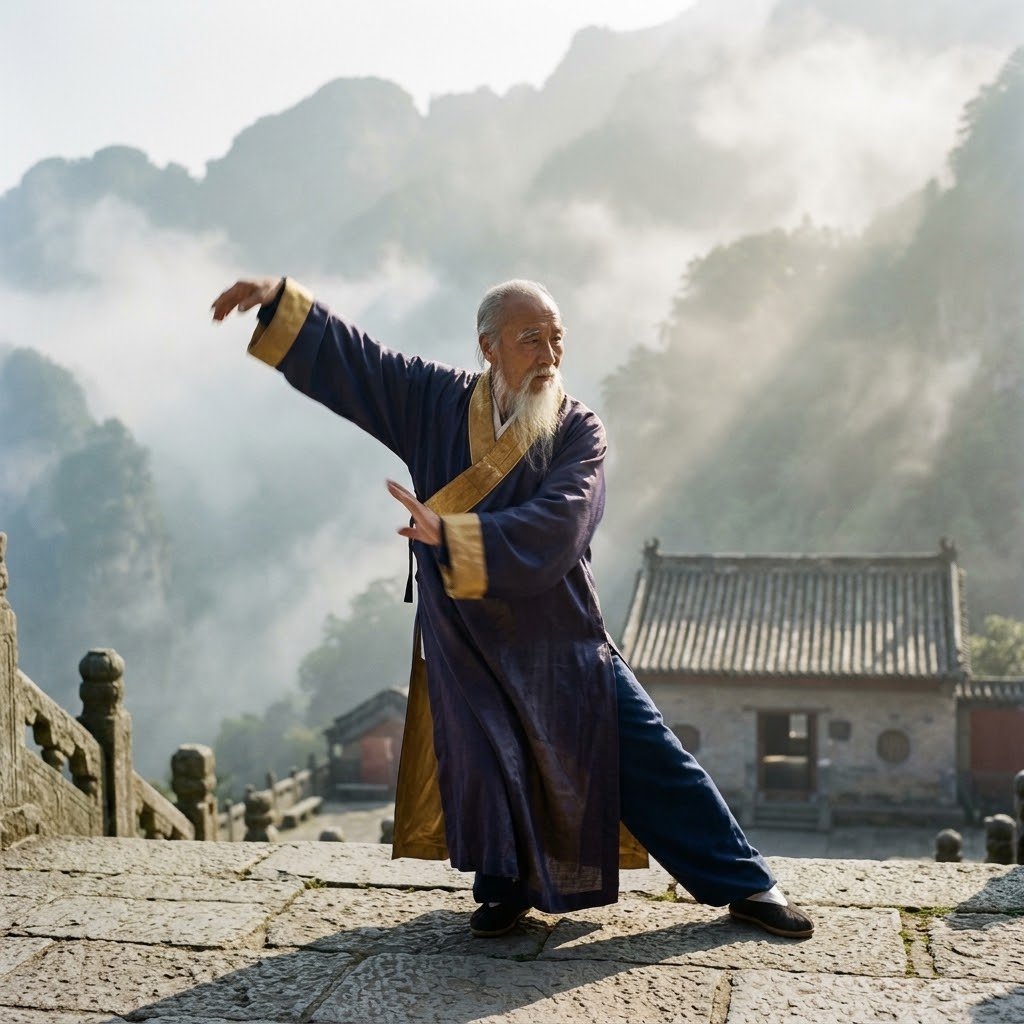
Zhang Sanfeng philosophy begins with a simple observation: the softest things in the world overcome the hardest. According to legend, Zhang Sanfeng was a Taoist monk who lived on Wudang Mountain. One day he watched a snake and a magpie fight. The magpie attacked with sharp, direct force. The snake yielded, circled, and redirected the energy. Neither conquered the other through brute strength. That encounter inspired the internal martial art we now call tai chi. [1]
This story is not just about combat. It is about how to live. Zhang Sanfeng taught that force meets force only creates more force. A yin yang necklace carries that lesson into daily life. When someone pushes you, you do not have to push back immediately. You can pause, absorb, and respond from a centered place. That is not weakness. It is a different kind of strength — one that preserves energy instead of burning it.
The philosophy also emphasizes jing, qi, and shen — essence, energy, and spirit. These are not religious ideas. They are practical ways of describing how a person moves through the world. When your energy is scattered, you react. When your energy is gathered, you choose. Wearing a yin yang necklace in black obsidian can serve as a tactile reminder to gather yourself before acting. The stone is cool and heavy. It asks you to slow down by one breath.
Zhang Sanfeng did not separate meditation from movement. He taught that everyday actions — walking, standing, working — could become practice. The same is true for jewelry. A pendant is not an escape from life. It is a small tool that helps you return to the present moment. That is the heart of Zhang Sanfeng philosophy: balance is not a place you find. It is a way you move.
[1] Encyclopaedia Britannica, “Zhang Sanfeng.” https://www.britannica.com/biography/Zhang-Sanfeng
Tai Chi Balance: How Slow Movement Builds Real Stability
Tai chi balance is often misunderstood as gentle exercise for relaxation. In truth, it is a sophisticated system for training stability under pressure. The slow, deliberate movements teach the body to shift weight without losing center. The breath leads the motion. The mind stays present. Over time, this practice rewires how a person responds to stress — not by freezing or exploding, but by yielding and redirecting.
A yin yang necklace can bring that practice into everyday life. Most people cannot stop for a 30-minute tai chi session in the middle of a workday. But they can touch a pendant. They can inhale for four counts and exhale for six. They can feel the weight of black obsidian against their chest and remember: I have a center. I can return to it. That micro-practice is not a replacement for formal training. It is a bridge between the mat and the rest of the world.
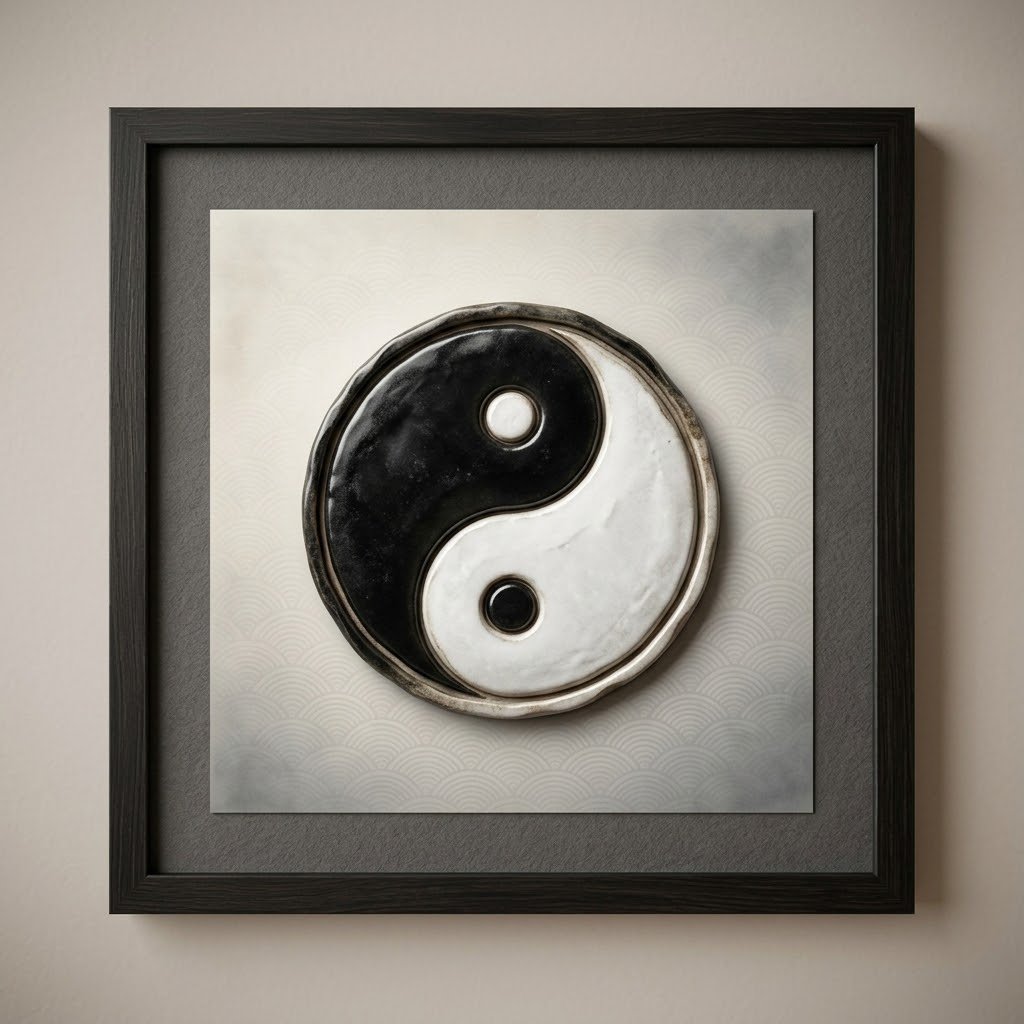
In tai chi, balance is never static. You are always adjusting, compensating, and responding. The same is true in life. A yin yang necklace does not promise perfect equilibrium. It reminds you that balance is a continuous conversation between opposites — action and rest, effort and ease, speaking and listening. The taiji symbol itself shows this: each half contains a dot of the other. Nothing is pure. Everything is connected.
For men especially, tai chi balance offers an alternative to the “push through no matter what” mindset. It teaches that recovery is part of training. Rest is part of strength. Stillness is part of movement. Wearing a yin yang necklace can be a private acknowledgment of that truth — a small, daily vote for sustainability over burnout.
Taoist Yin Yang Meaning: More Than a Symbol
Taoist yin yang meaning goes far beyond a simple logo. In Taoist philosophy, yin and yang are not opposites in conflict. They are complementary phases of the same cycle. Yin is receptive, dark, cool, and still. Yang is active, bright, warm, and moving. Neither is good or bad. They give birth to each other. When yang reaches its peak, yin begins. When yin reaches its depth, yang returns. This is the rhythm of breath, day and night, seasons, and life itself.
Zhang Sanfeng built his entire approach to health and martial arts on this principle. He taught that a person who only exerts yang energy will eventually collapse. A person who only rests in yin energy will stagnate. The goal is not to choose one side. The goal is to move fluidly between them. A yin yang necklace made of black obsidian embodies that teaching. Obsidian is formed by intense heat (yang) cooling into dark glass (yin). The stone itself is a record of the transition.
Wearing this symbol is not about declaring a belief system. It is about carrying a question: Where am I right now? Am I forcing? Am I hiding? The pendant rests close to the heart. When you touch it, you can check in without anyone else knowing. That private moment of awareness is the practical application of Taoist yin yang meaning. It is philosophy made tangible.
In a world that rewards constant productivity, the yin-yang symbol is quietly radical. It says that rest is not laziness. It says that darkness is not evil. It says that balance is not a one-time achievement. It is a lifelong practice. A yin yang necklace is a small invitation to that practice — a reminder that you are allowed to be whole, not just useful.

It represents balance — not perfection, but the ongoing movement between rest and action, dark and light, giving and receiving.
Zhang Sanfeng was a legendary Taoist monk associated with Wudang Mountain and the development of tai chi. His philosophy emphasized softness, balance, and internal energy.
No. The symbol comes from Taoist philosophy, but people wear it for personal, cultural, or philosophical reasons.
Black obsidian is volcanic glass. It is associated with grounding, protection, and honest reflection.
Yes. The design is unisex, and the black obsidian style leans toward a quiet, masculine aesthetic.
Wear it close to the chest, either over a shirt or underneath. Let it rest where you can touch it easily.
Avoid long exposure to water, soap, and chlorine. Wipe it dry after contact.
Yes. It works as a mindful gift for a partner, friend, sibling, or anyone who values balance.
Many people use moonlight, sound, or dry salt. Avoid harsh chemicals and prolonged soaking.
This theme focuses on black obsidian, but Qi Voyage may explore other energetic materials over time.
Subscribe
Login
Oldest
Newest
Most Voted
YOU MAY ALSO LIKE
CompareAdd to Cart
This product has multiple variants. The options may be chosen on the product page
CompareAdd to Cart
This product has multiple variants. The options may be chosen on the product page
CompareAdd to Cart
This product has multiple variants. The options may be chosen on the product page
CompareAdd to Cart
This product has multiple variants. The options may be chosen on the product page
Yin Yang Necklace: A Black Obsidian Symbol of Balance, Grounding, and Quiet Strength
CompareAdd to Cart
This product has multiple variants. The options may be chosen on the product page
CompareAdd to Cart
This product has multiple variants. The options may be chosen on the product page
CompareAdd to Cart
This product has multiple variants. The options may be chosen on the product page
CompareAdd to Cart
This product has multiple variants. The options may be chosen on the product page
CompareAdd to Cart
This product has multiple variants. The options may be chosen on the product page


CompareAdd to Cart
This product has multiple variants. The options may be chosen on the product page
CompareAdd to Cart
This product has multiple variants. The options may be chosen on the product page
CompareAdd to Cart
This product has multiple variants. The options may be chosen on the product page
CompareAdd to Cart
This product has multiple variants. The options may be chosen on the product page
SIGN UP AND GET 10% OFF*
Be first to receive updates on new collections, style inspiration, gift ideas and exclusive access. Sign up to the SARAH’S WHISPER Club today and receive 10% off* on your next online purchase (full-price items only). *Terms and conditions apply.